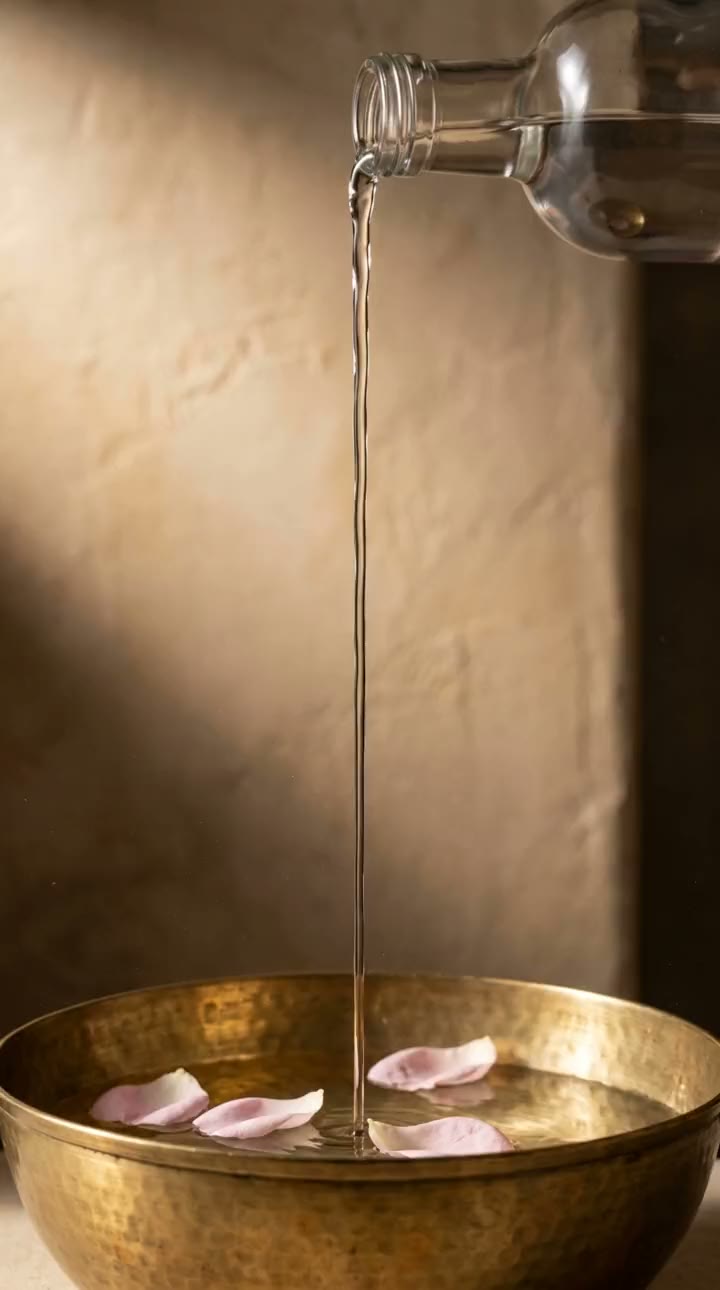
Start damp
Pat the skin lightly, leaving it faintly damp.
Open house · Dhaka · Cash on delivery
Try a product, a ritual (hammam, face, hair) or a place (Fès, Sahara).
The ingredient
Argan is the oil of a single corner of the world. The tree grows wild almost nowhere but the south-west of Morocco, and every drop in this bottle began as a kernel sealed inside the hard nut of its fruit.
Pressed without roasting, those kernels give an oil the colour of late afternoon: faintly nutty, and gone into the skin within a minute. Morocco calls it liquid gold.
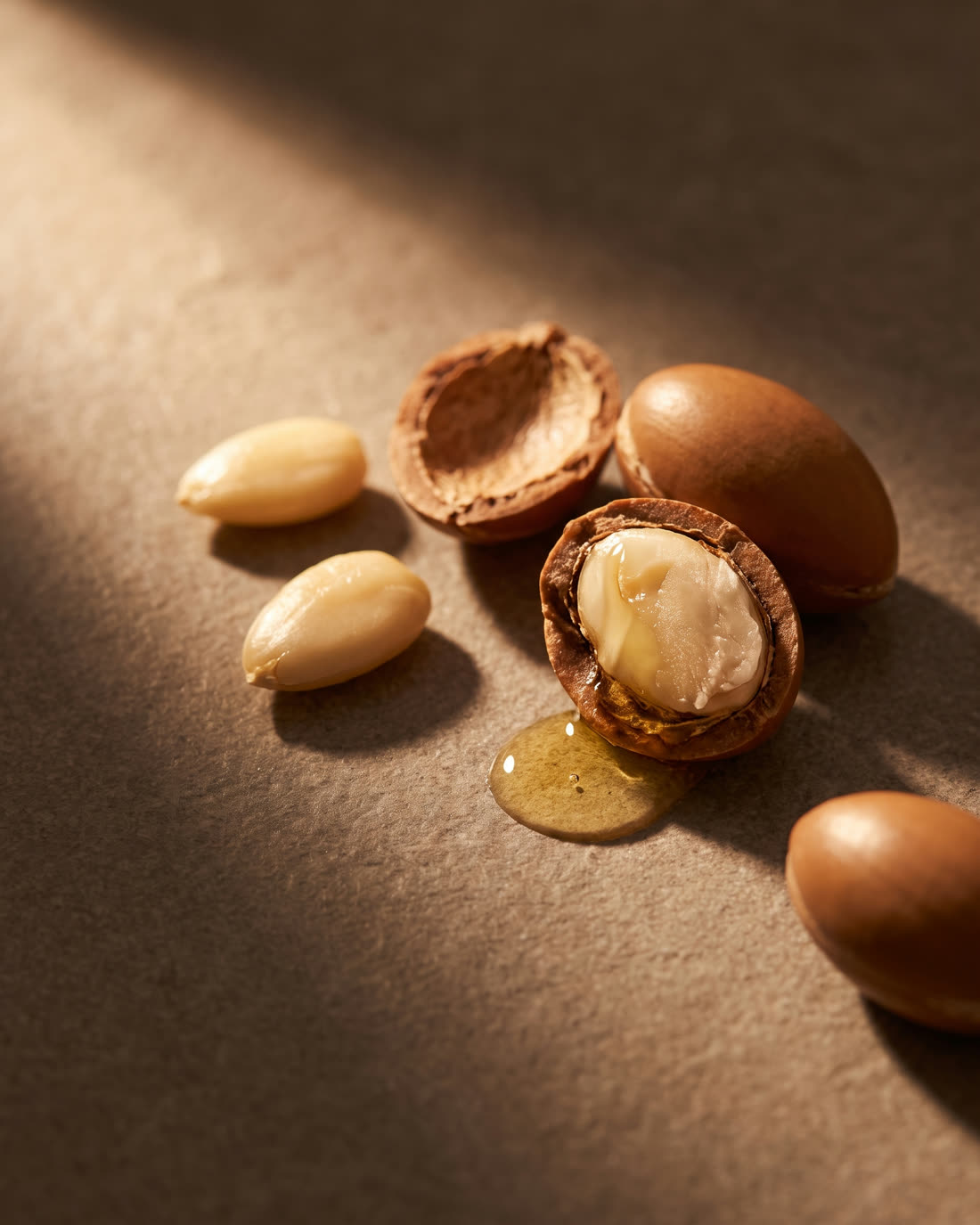
The ingredient, in depth
Argania spinosa is thorned, slow-growing and built for drought, its roots reaching deep into stony ground and holding it against the advancing desert. The forest it forms between the High Atlas, the Anti-Atlas and the Atlantic is unlike any other, and in 1998 UNESCO named it the Arganeraie Biosphere Reserve.
The fruit is gathered and dried, and its pulp is stripped away. Then comes the hardest part: traditionally, the nut is cracked by hand, stone against stone, to free the few small kernels inside. This knowledge has passed between generations of Amazigh women, and in 2014 UNESCO inscribed it on its list of the Intangible Cultural Heritage of Humanity.
Argan for the skin is pressed from unroasted kernels; argan for the table, from roasted ones, which darkens the oil and gives it a toasted scent. Left unroasted, it keeps more of what matters to the skin: an oil rich in oleic and linoleic fatty acids and naturally high in vitamin E, which roasting diminishes. That is why cosmetic argan smells faintly nutty, and never toasted.
How to use it
Three rules carry every use of this oil. Warm it between the palms first, because warm oil spreads and cold oil sits. Apply it to damp skin or damp hair, because oil holds water in and cannot put water there. And press rather than rub, so it goes into the skin instead of across it.
After the shower, while the skin is still damp.
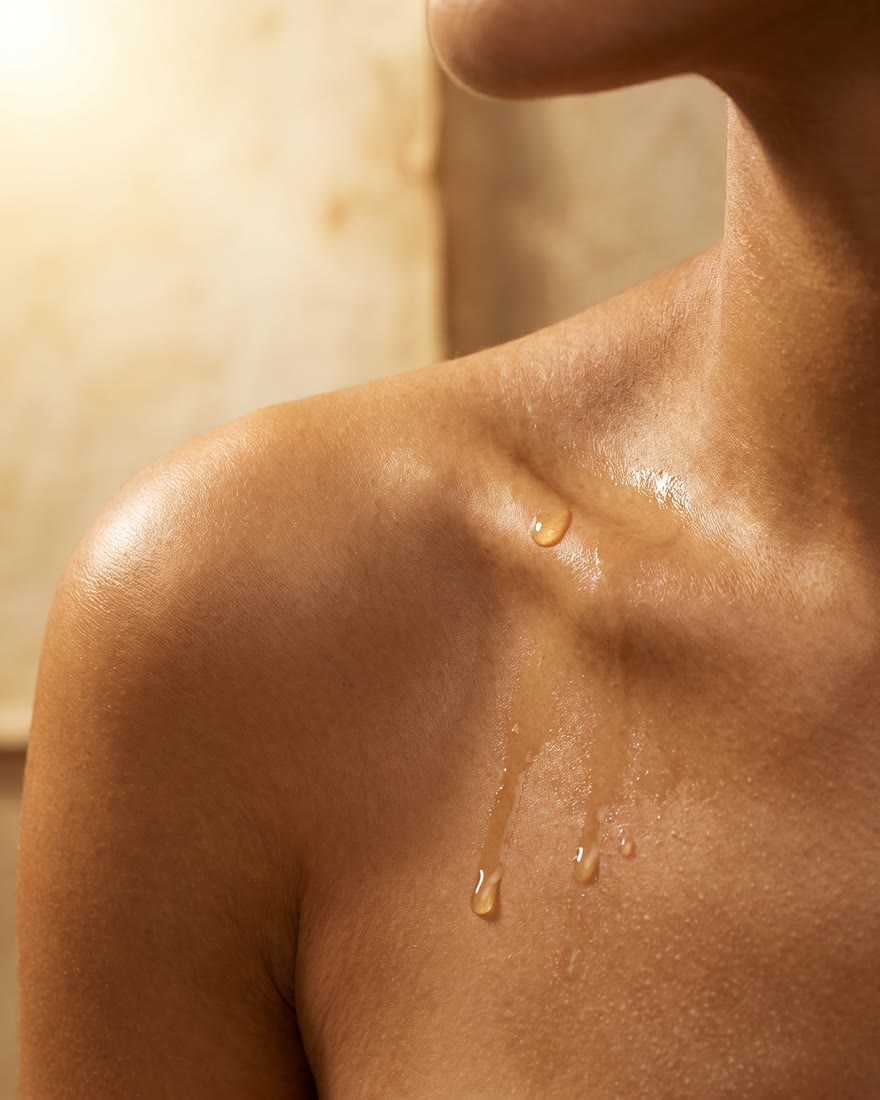
Pat the skin lightly, leaving it faintly damp.
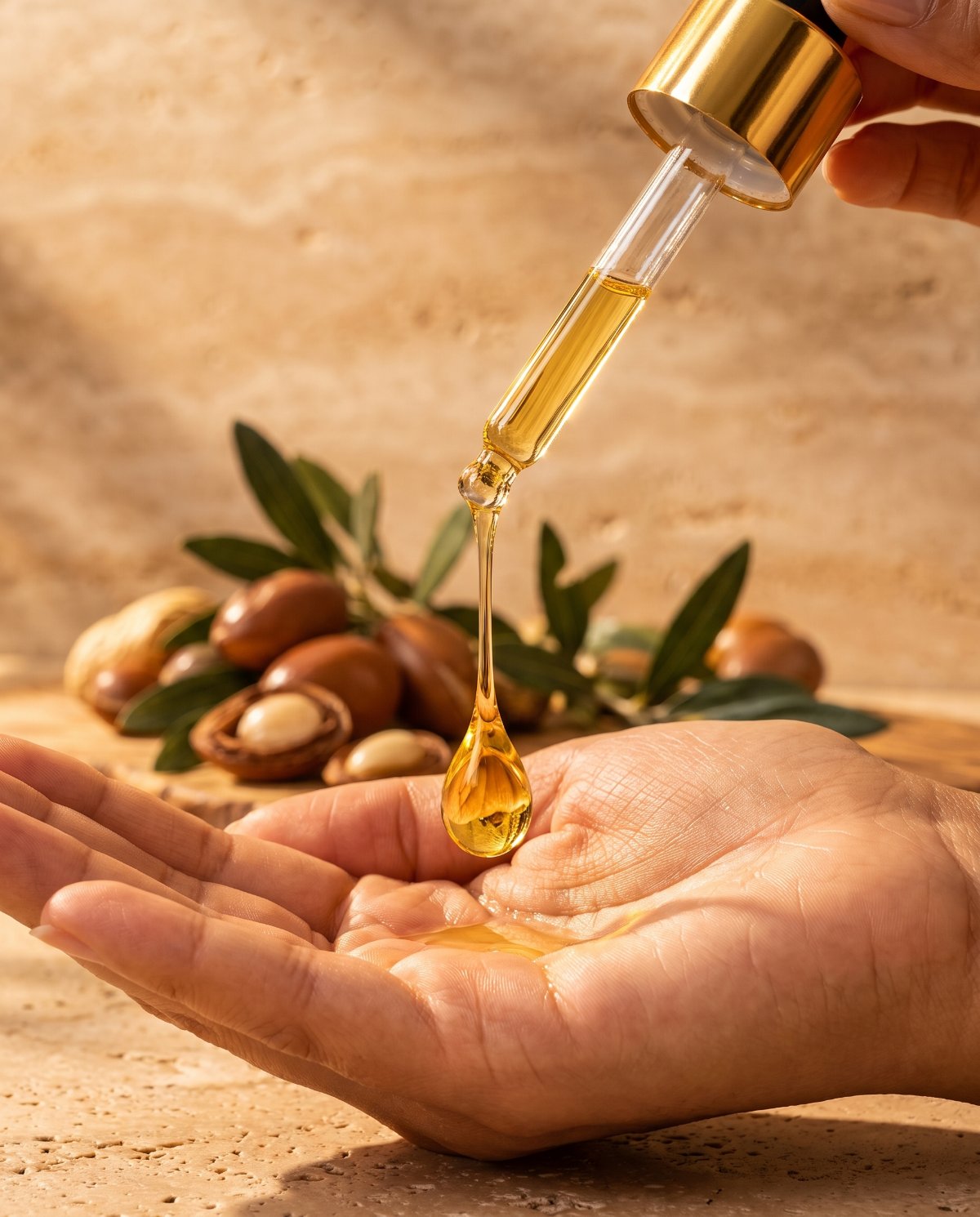
A few drops into the palm, more for the arms and legs. Rub your hands together until the oil is warm.
Press it into damp skin: the arms, the shoulders, the backs of the hands.
Real argan sinks in and leaves no film behind.
Elbows, knees and heels take more, and take it more slowly. Give them what is left on your hands.
Two drops, ideally at night.
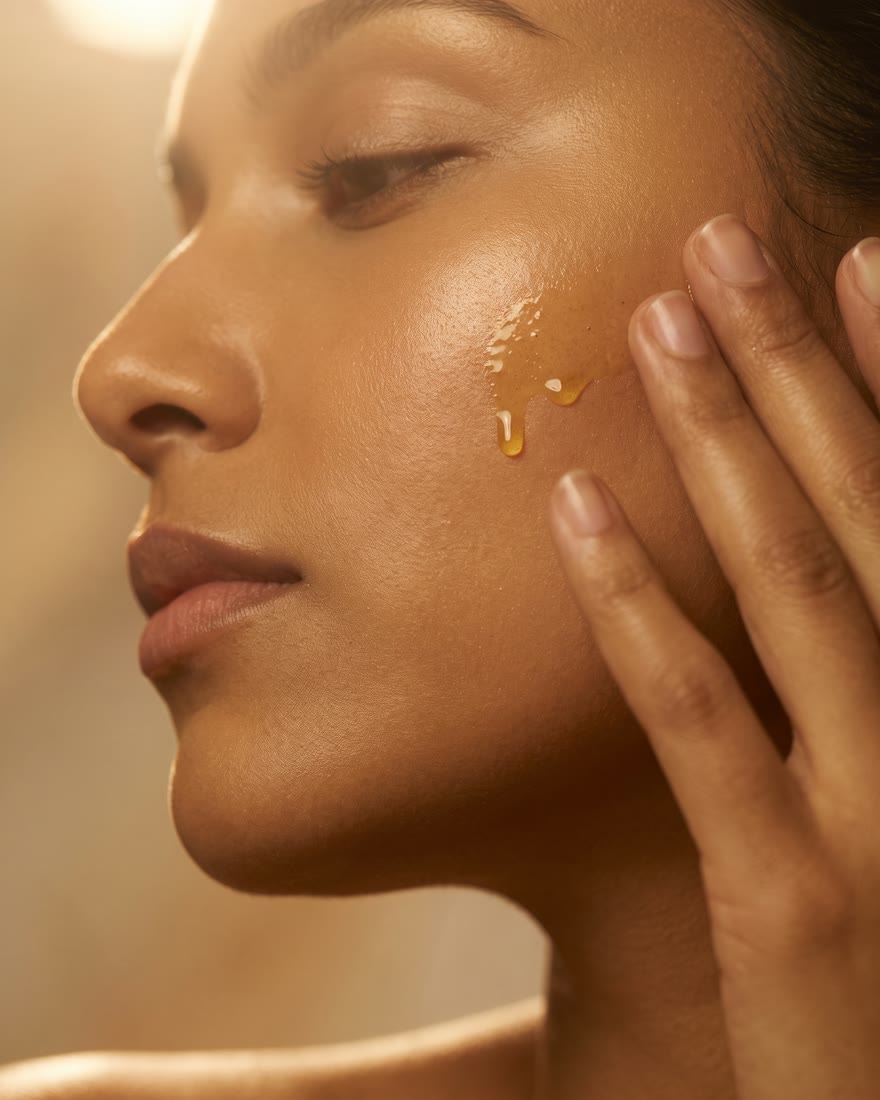
Begin with clean skin and a little ARGANI Rose Water, misted or patted on, or simply leave the face damp from rinsing.
Two drops are enough for the whole face and neck. Warm them between the fingertips.
Press gently over the cheeks, forehead and chin, then down the neck. Keep well clear of the eyes.
At night it has hours to work. In the morning, give it a few minutes to sink in before anything else goes on.
If your skin tends to shine, one drop is plenty.
On the ends after washing, or the full length before.
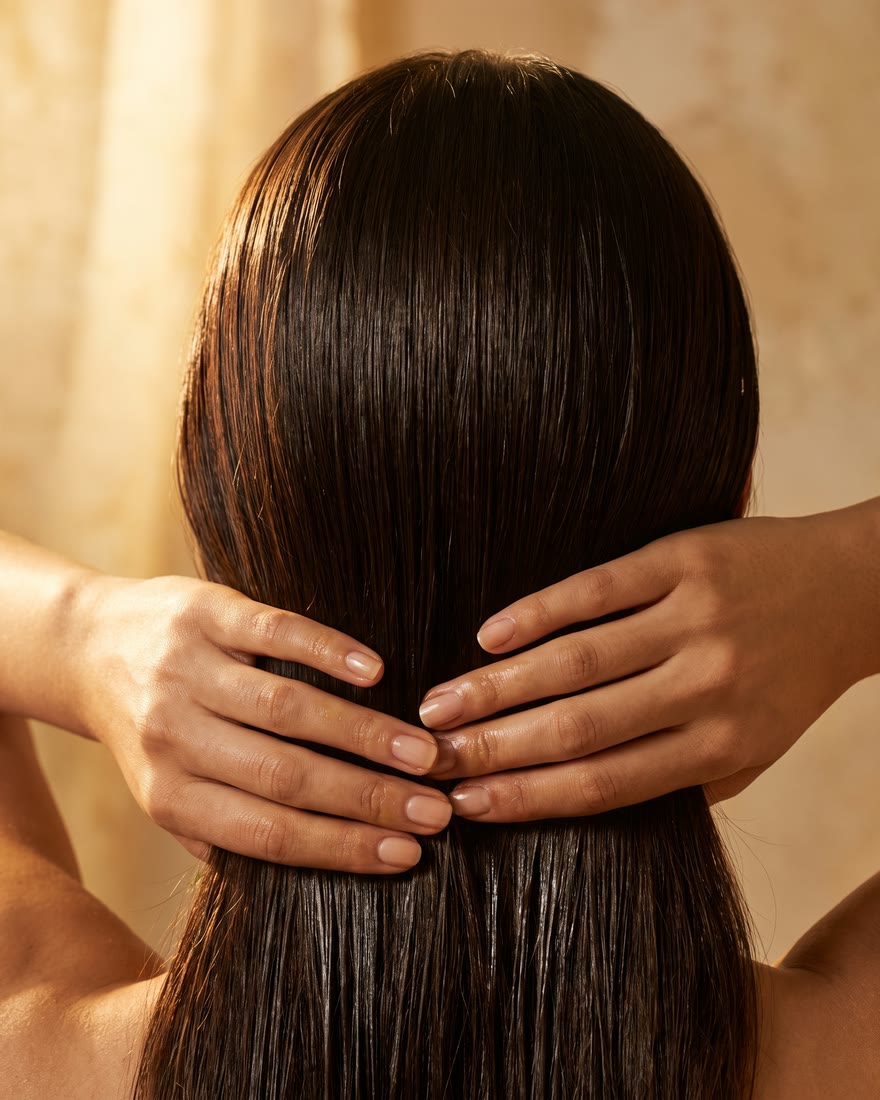
After washing, work one or two warmed drops through the mid-lengths and ends. Keep it away from the roots.
For a deeper treatment, comb more oil through dry lengths, leave it thirty minutes to an hour, then shampoo as usual.
A single warmed drop, smoothed over dry ends, is enough between washes.
Fine hair takes a single drop. Begin with less and add more; oil leaves the hair only with another wash.
For external use only. Keep away from the eyes. Patch test on the inner arm before the first full use.
Authenticity
An oil this laborious to make is an oil worth diluting, and a good deal of what is sold as argan has been cut with something cheaper. Those who know it rely on three quiet signs. None is a laboratory test, and none settles the question alone; read together, they tell you a great deal.
Faint, nutty, a little earthy. Real cosmetic argan is never perfumed and never entirely without scent, and a toasted note usually means roasted, culinary oil.
A clear gold. A deep amber suggests roasted kernels, and an oil that is almost colourless has often been refined or thinned.
It should sink in within a minute and leave the skin soft rather than slick. An oil that lingers as a film, or feels heavy or tacky, has usually been blended with a cheaper one.
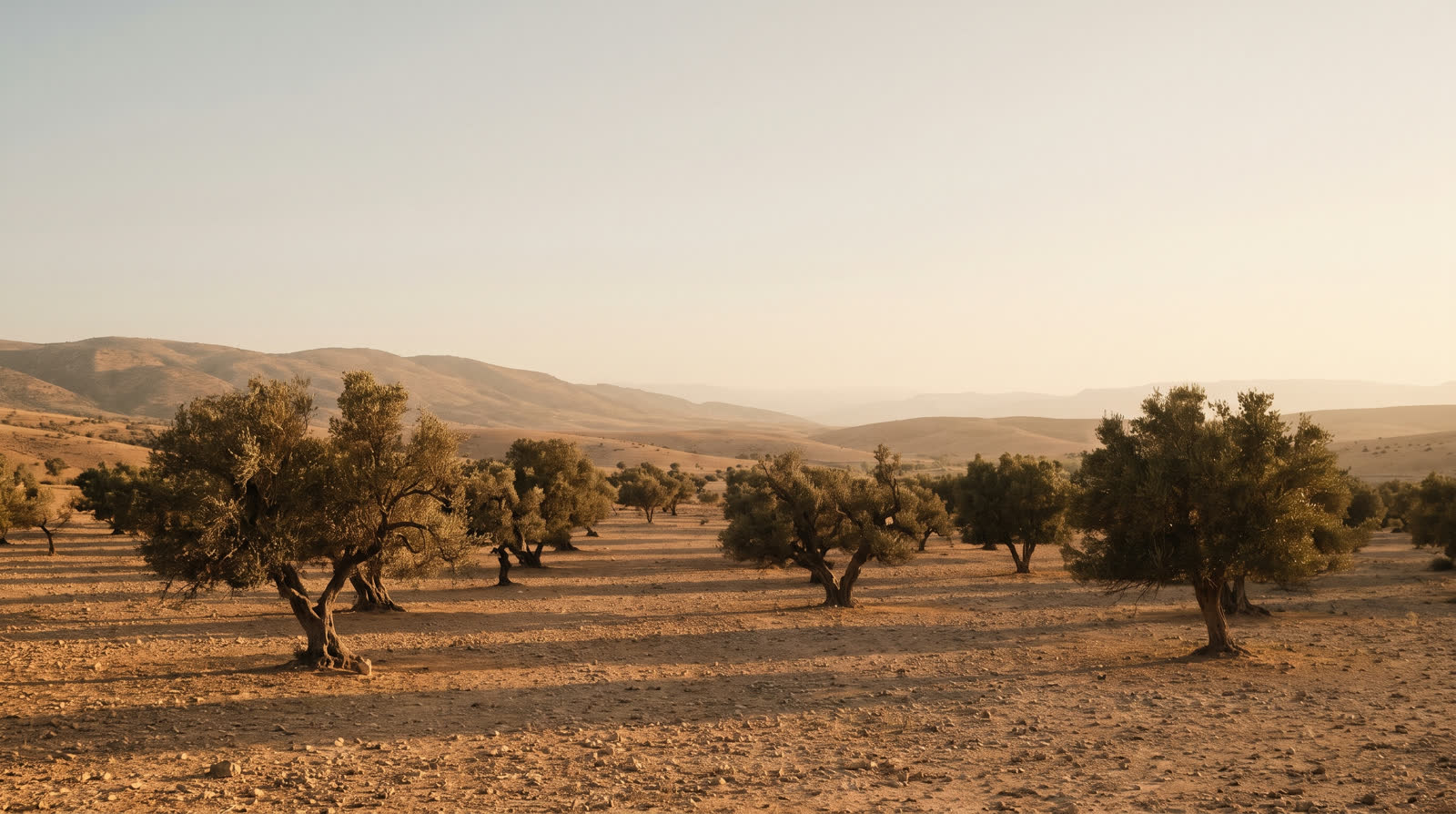
Ours comes from a single region: Souss-Massa, on Morocco's Atlantic coast.
Provenance
ARGANI does not buy its argan from a warehouse. Ours comes from Souss-Massa, the region where the argan forest meets the Atlantic, and it reaches Dhaka through as few hands as we can manage. Fewer hands is the surest protection against a diluted bottle.
The ARGANI standard
Pressed from unroasted kernels of the argan tree, grown in Souss-Massa on Morocco's Atlantic coast. Rich in vitamin E and in the oleic and linoleic acids that keep skin supple, it sinks in quickly and leaves a soft satin finish on the face, the body and the ends of the hair. One ingredient, one origin, sealed by ARGANI.
The khatem
The eight-pointed star of Moroccan zellige is the mark on every ARGANI piece. Hold it closed, and it gives up where this one began.
Sealed by ARGANI
Argan Oil
From the Amazigh to your skin
In their words
No review is published yet for this piece. If you have used it, yours would be the first.
Kept at its finest
Like every fine oil, argan is undone by light and heat. Keep the bottle closed, out of the sun, and away from the bathroom window.
Should the scent ever turn sharp, the oil is past its best.
Make it yours
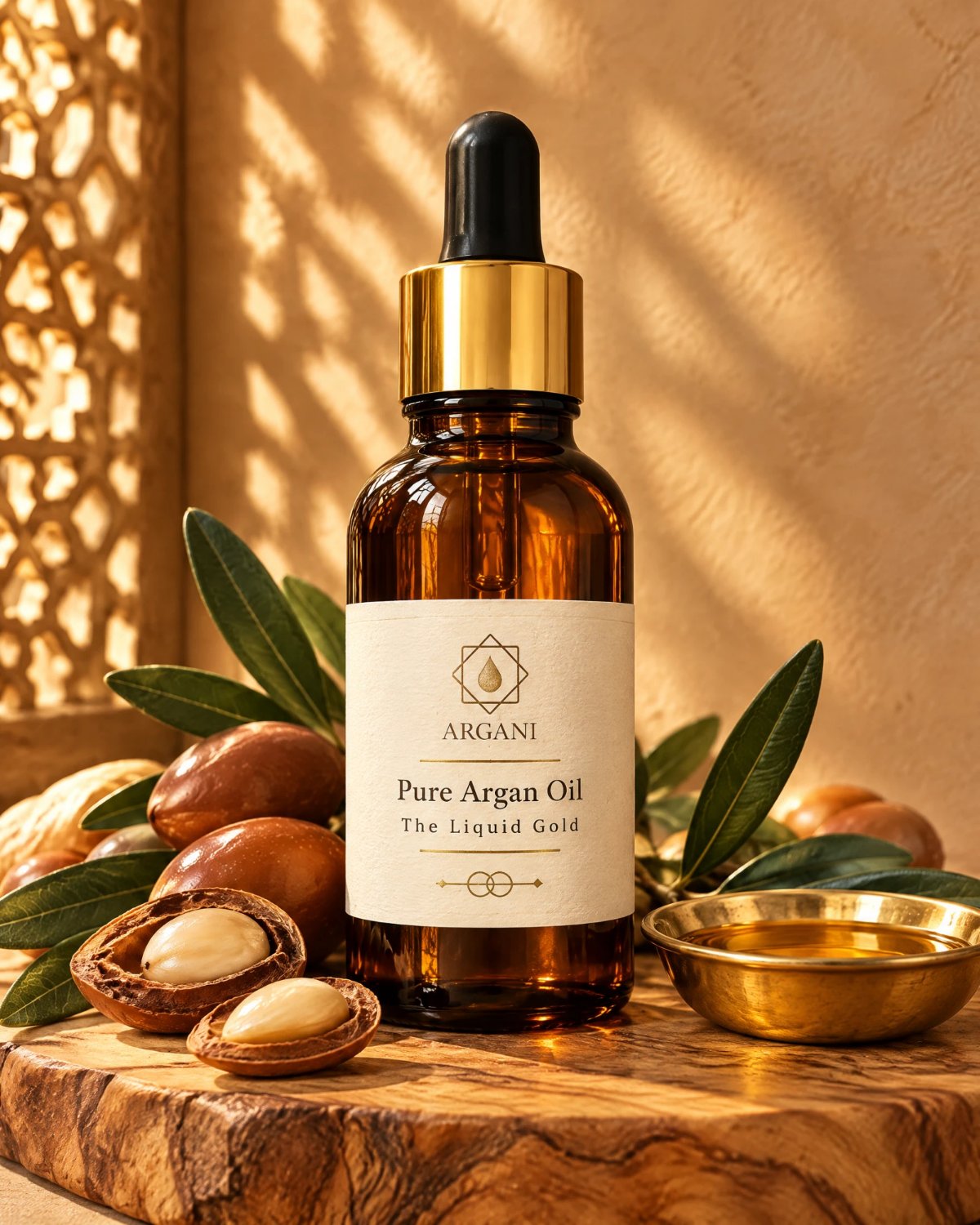
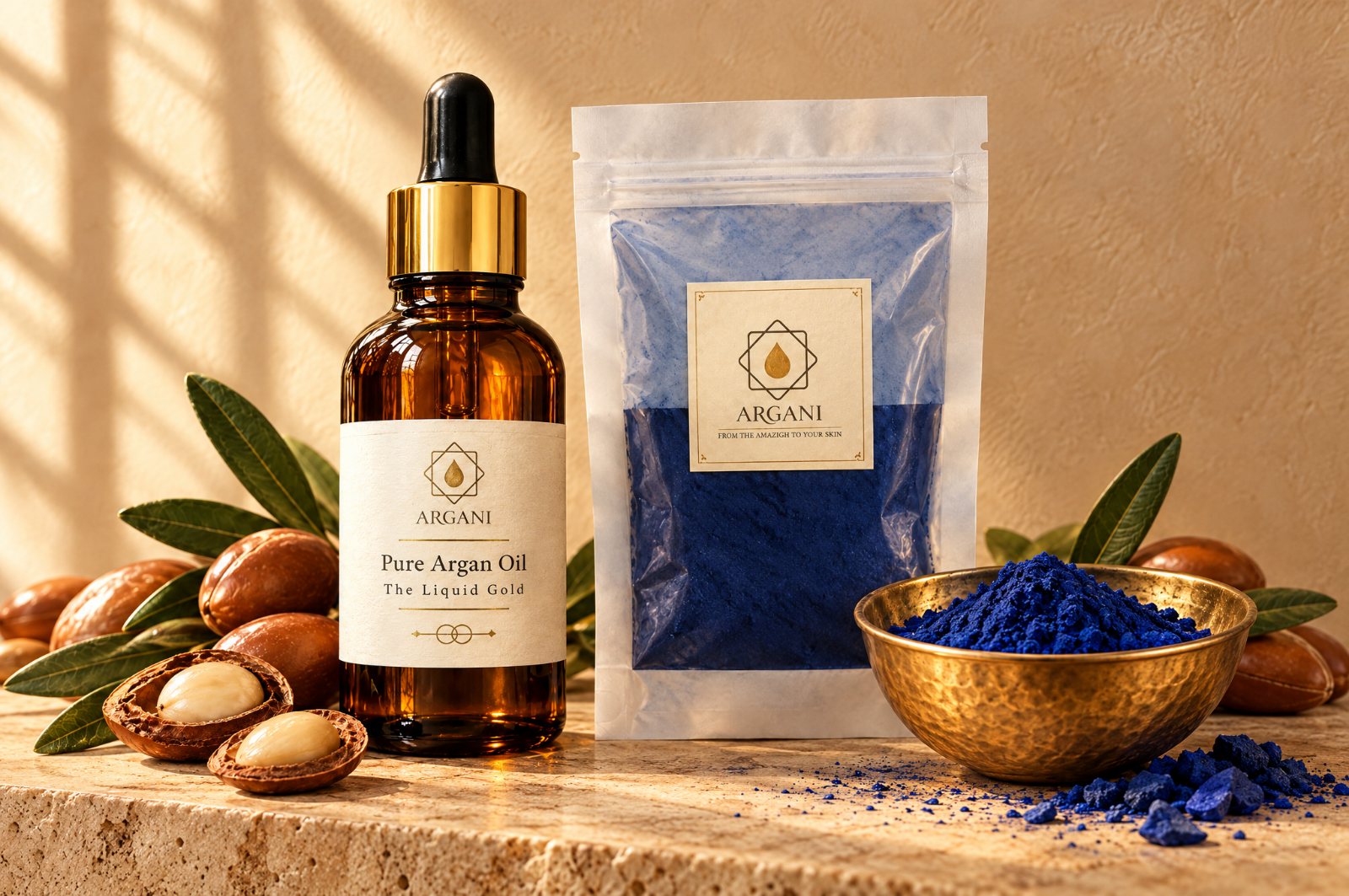
Argan from the Souss, for skin that keeps its suppleness.
30 ml ৳ 1,400
or order on WhatsAppCash on delivery. The founder confirms your order and its delivery with you.
ARGANI
You are already holding the bottle. Whatever you would like to know about it, and whenever you would like another, the founder answers personally.