Wake the stone
Rub the stone in a little warm water, or grind a small amount from it, to free a fine blue. A little goes a long way.
Open house · Dhaka · Cash on delivery
Try a product, a ritual (hammam, face, hair) or a place (Fès, Sahara).
The ingredient
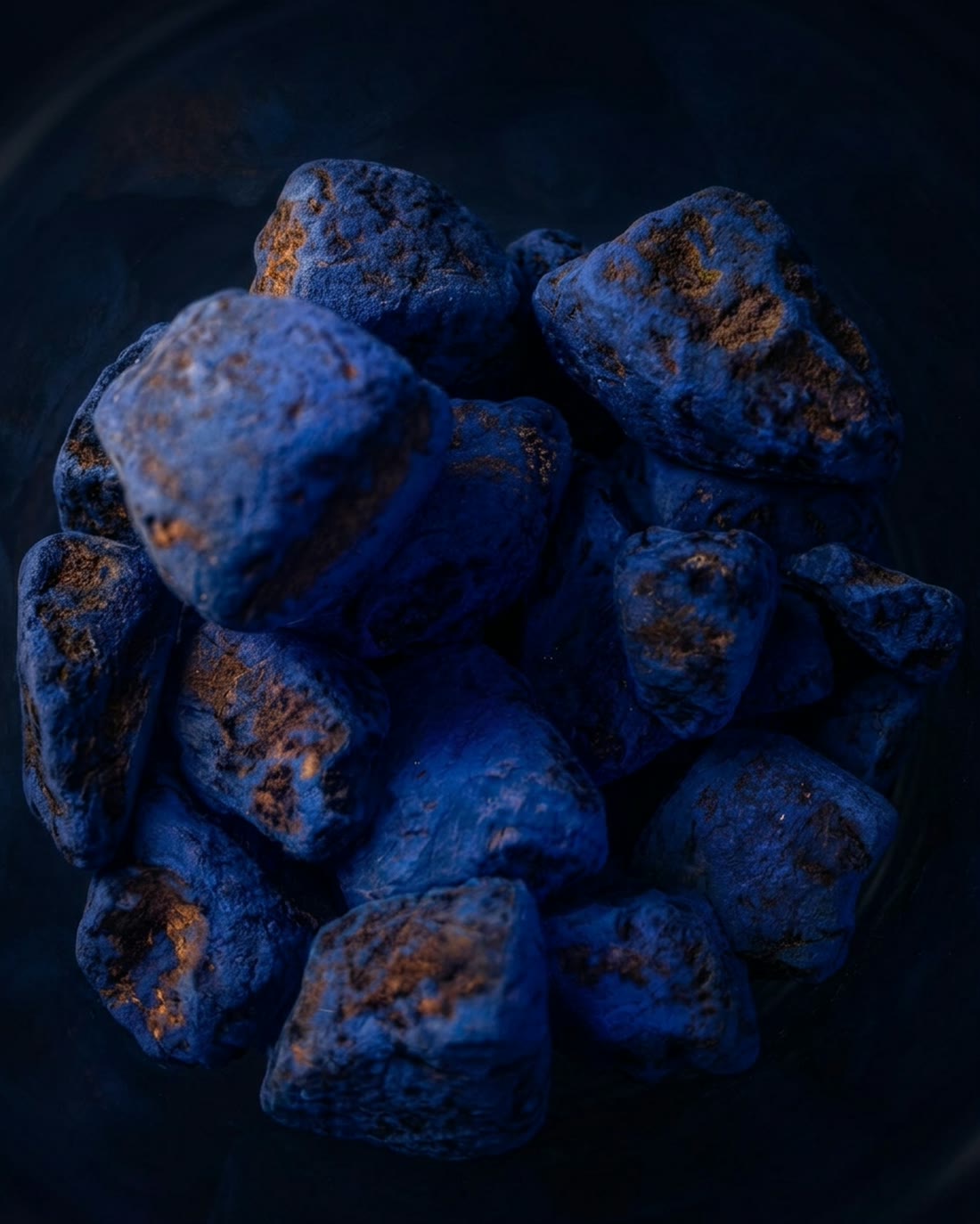
Nila is indigo. It comes from the indigo plant, fermented and pressed until it sets hard as a stone. It looks like a mineral and handles like one, which is why it is so often sold as one. It is not. It is a botanical pigment in stone form, and knowing that is the difference between a house that sources and a house that resells.
Ours is a deep blue, with darker blue running through it and a faint natural sparkle where the light catches a broken face. No two pieces match, because a pressed pigment does not come out of a mould.
The forms
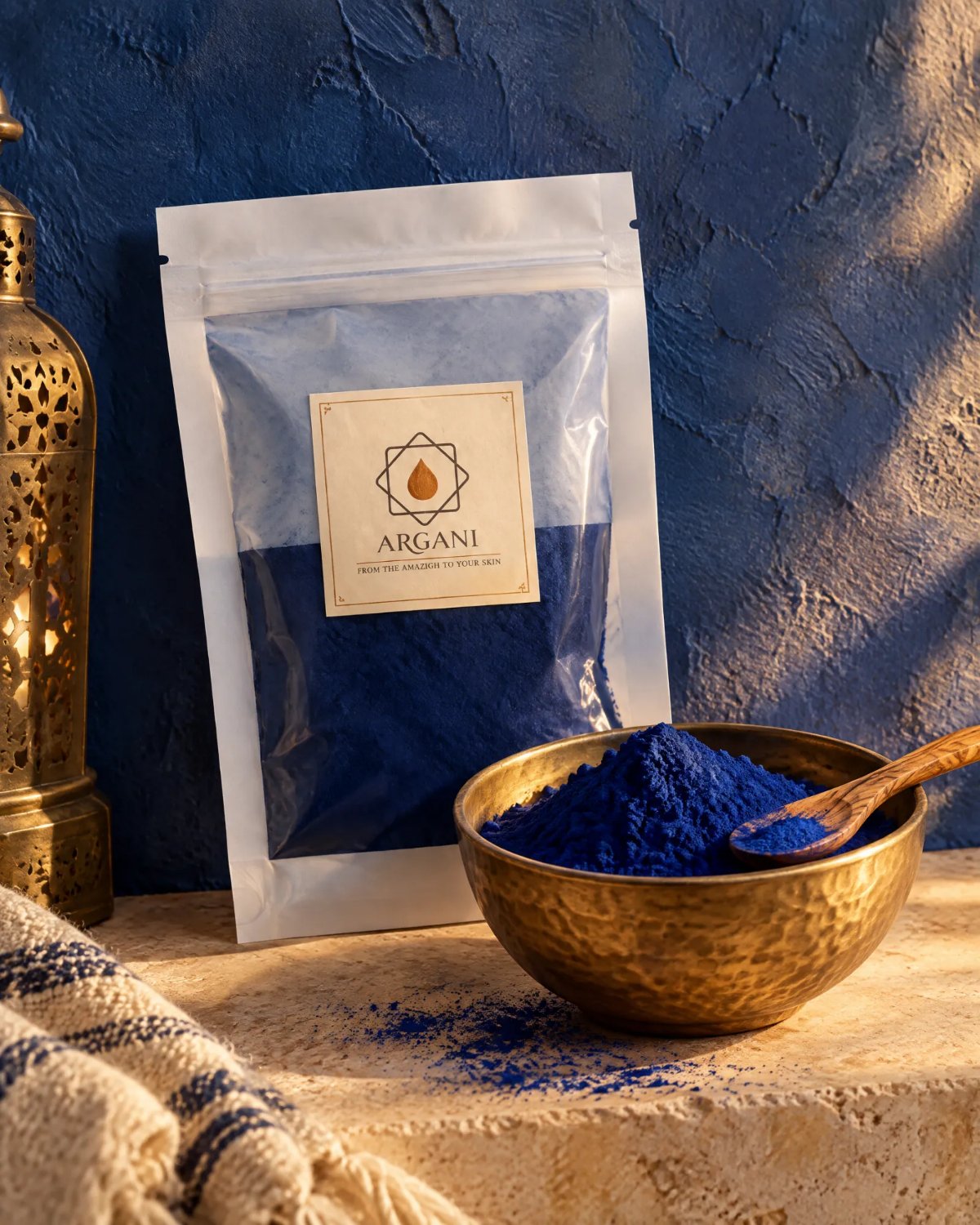
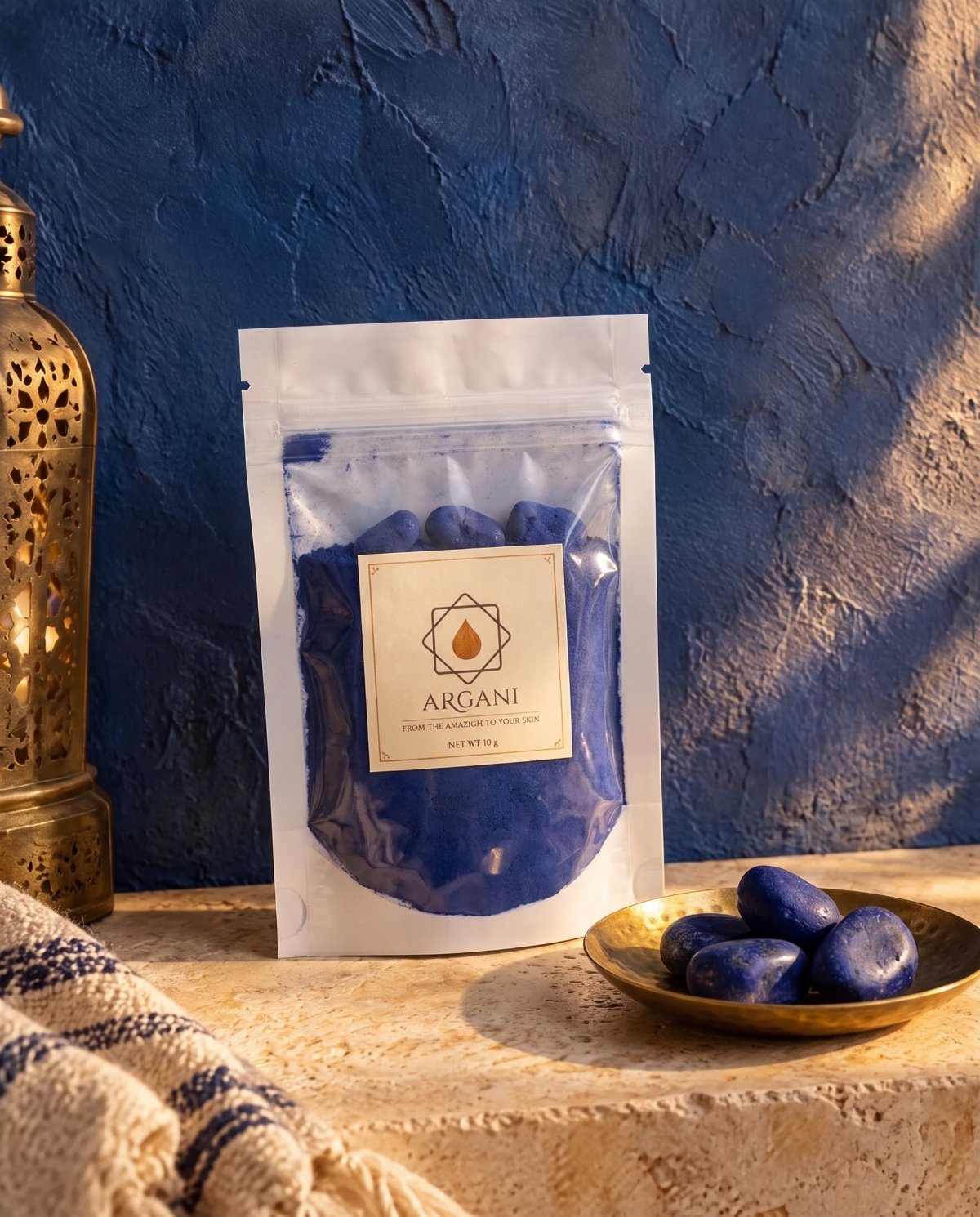
ARGANI offers the stone. The powder and the paste are what it becomes in your hands, shown here so you know what to expect at each stage.
As it arrives: rough pieces of deep blue.
Grated or rubbed from the stone, a little at a time.
Folded into yogurt or water, just before use.
ARGANI offers nila as stones only. It is not sold as a ready powder or paste.
How to use it
The classic way to wear nila is on the face, folded into plain, unsweetened yogurt. The yogurt gives the paste body and a cool, soft feel, and lets the blue spread evenly rather than drag. Nila gives its colour up slowly, so the ritual is unhurried: let the water do its work before you reach for anything else.
About a quarter of an hour, start to finish.
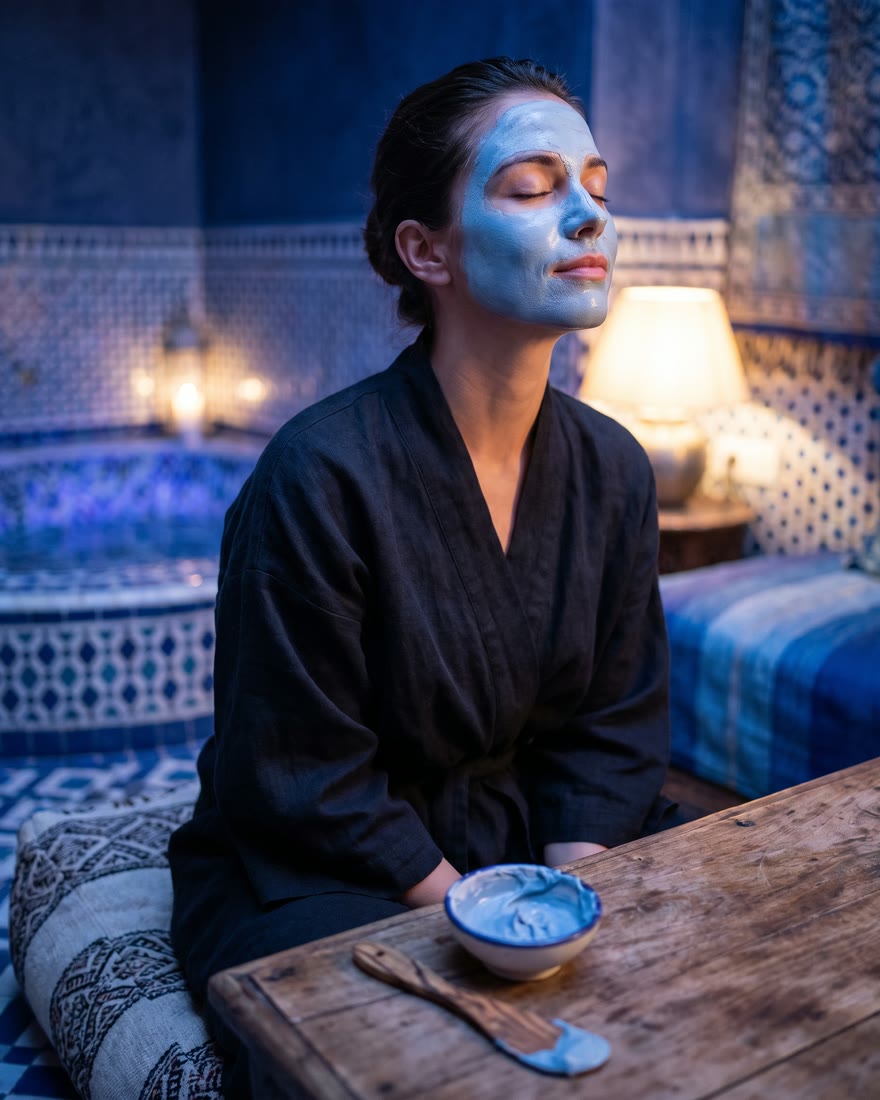
Rub the stone in a little warm water, or grind a small amount from it, to free a fine blue. A little goes a long way.
Stir the blue into a spoonful of plain, unsweetened yogurt until the colour is even. Sweetened or flavoured yogurt has no place here.
If the paste is stiff, add ARGANI Rose Water a few drops at a time, until it spreads without running.
Smooth it over clean skin, keeping clear of the eyes and lips, and leave it for ten to fifteen minutes.
Rinse with lukewarm water, press dry, and finish with ARGANI Argan Oil while the skin is still damp.
Once or twice a week is plenty.
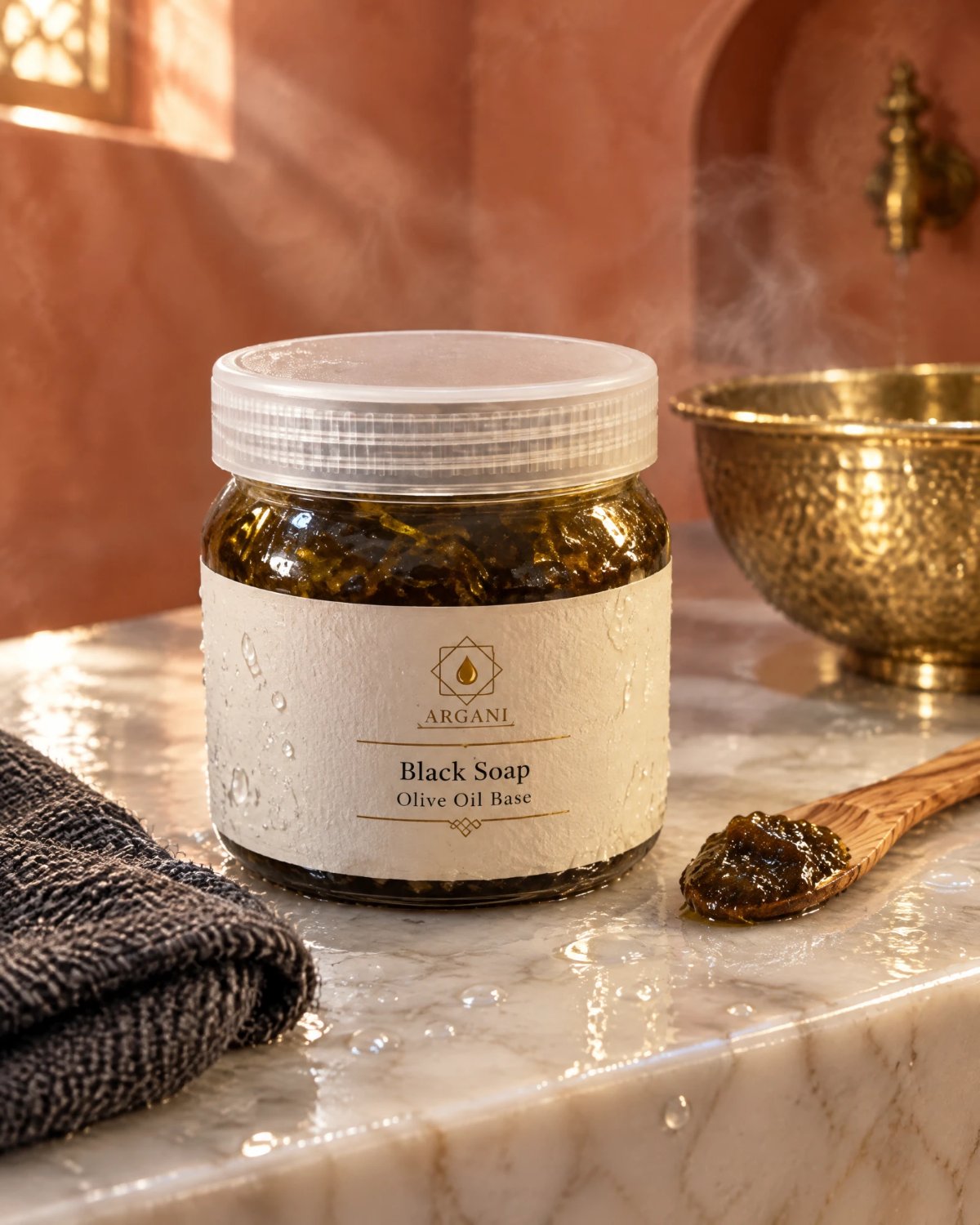
After black soap, on skin softened by steam.
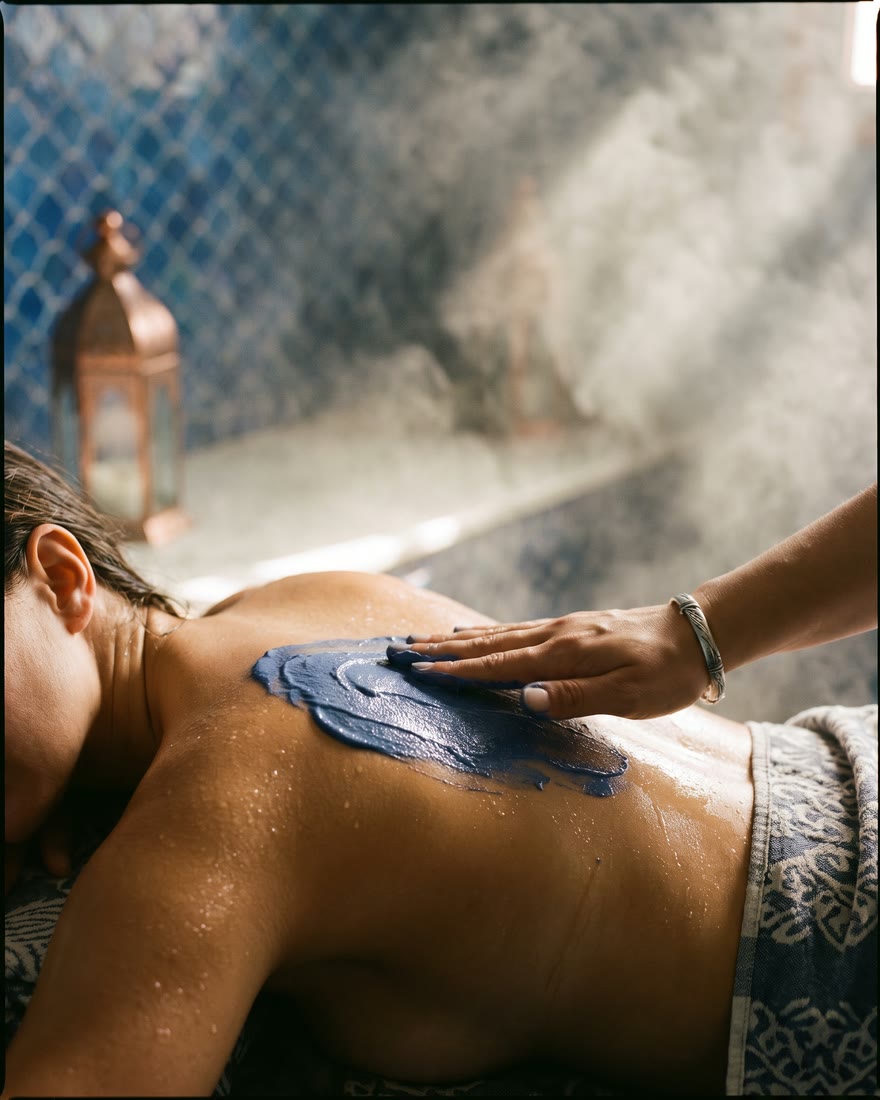
ARGANI Moroccan Black Soap and steam first, so the skin is soft and clean before any colour goes on.
Work the blue into a little warm water or into what is left of the soap, to a smooth paste.
Ten to fifteen minutes on the skin, then rinse in warm water.
For external use only. Keep clear of the eyes, and patch test on the inner arm before the first full use.
Authenticity
A material this prized invites imitation, most often a synthetic dye sold for a fraction of the price of the real thing. Those who know nila rely on a few quiet observations. None is a laboratory test, and none is conclusive alone; read together, they are telling.
Authentic nila is irregular in shape and in colour: a deep blue veined with darker tones, with a faint natural glint where a piece has broken.
Indigo is reluctant to dissolve. In still water it gives its colour up slowly and much of it settles, where a synthetic dye clouds the whole glass almost at once.
Rinsed away, indigo tends to leave without protest. A dye is more inclined to cling and to stain, most visibly at the hairline and around the nails.
Ours begins as indigo grown in India, and is milled and blended in Souss-Massa.
Provenance
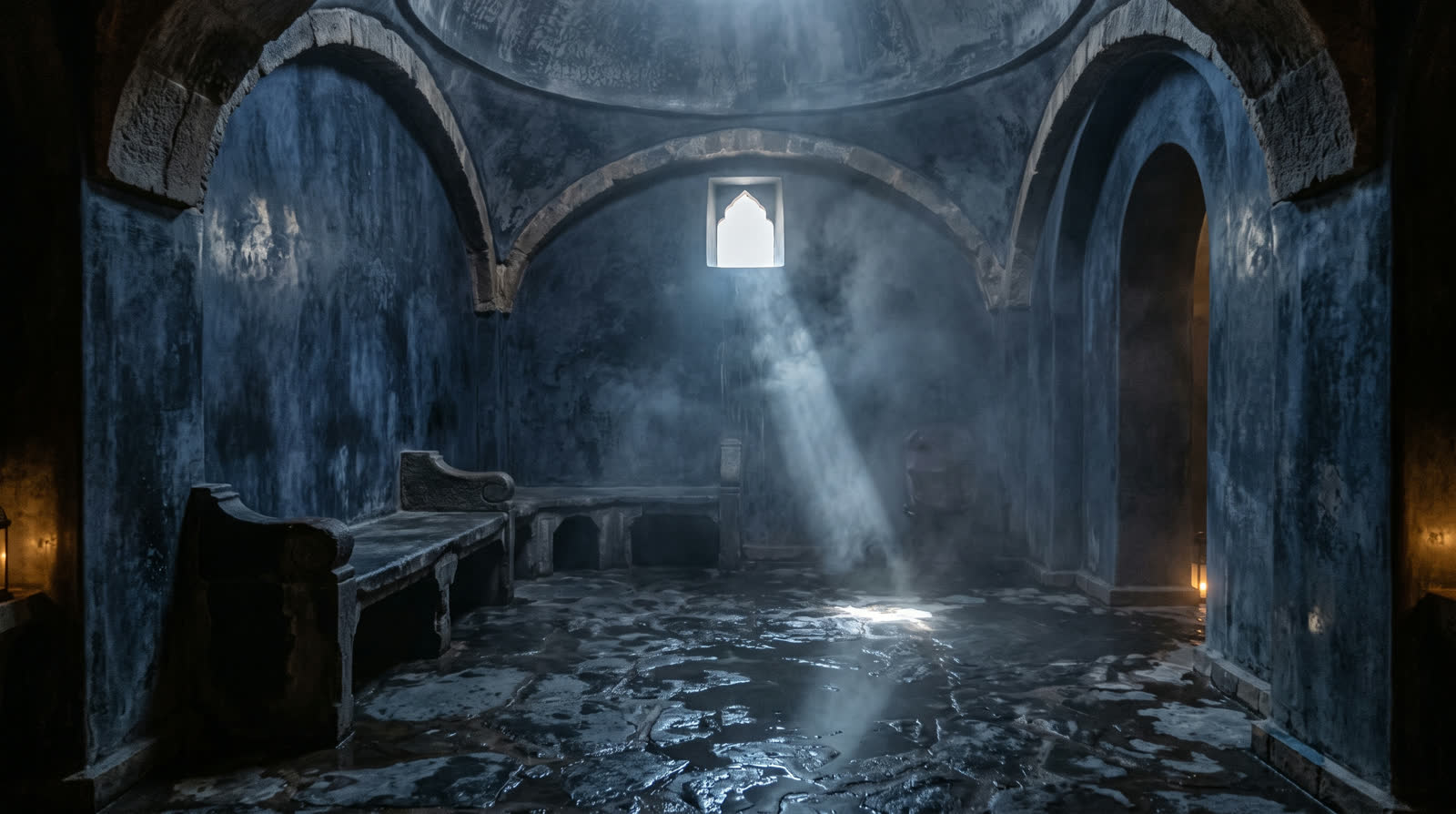
Indigo reached Morocco as a dye for cloth and leather, and Amazigh women turned it into something else entirely. In the Sahara it became a bridal ritual: the blue went on days before the wedding so the skin would carry a particular clarity on the day. It never left the hammam.
Ours travels further than most. It begins as indigo grown in India, is milled and blended in Souss-Massa, on Morocco's Atlantic coast, and reaches ARGANI through our supplier in Marrakech-Safi.
The ARGANI standard
Indigo grown in India, milled and blended in Souss-Massa, and kept by Moroccan women for generations. Loosened with yogurt or water and laid on the skin, it leaves the complexion visibly brighter and more even. A radiance ritual as old as the hammam itself.
The khatem
The eight-pointed star of Moroccan zellige is the mark on every ARGANI piece. Hold it closed, and it gives up where this one began.
Sealed by ARGANI
Nila Stones
From the Amazigh to your skin
In their words
No review is published yet for this piece. If you have used it, yours would be the first.
Kept at its finest
Nila is a pigment, so it will colour a wet towel, a basin and pale grout. Kept dry between uses, a stone will last for years.
For external use only. Patch test on the inner arm before the first full use. Avoid the eye area. Keep out of reach of children. Not to be swallowed.
Make it yours
Moroccan indigo, for a visibly brighter, more even complexion.
50 g ৳ 2,400
New to Nila? Begin with 10 g, ৳480.
or order on WhatsAppCash on delivery. The founder confirms your order and its delivery with you.
ARGANI
You are already holding the stone. Whatever you would like to know about it, and whenever you would like another, the founder answers personally.